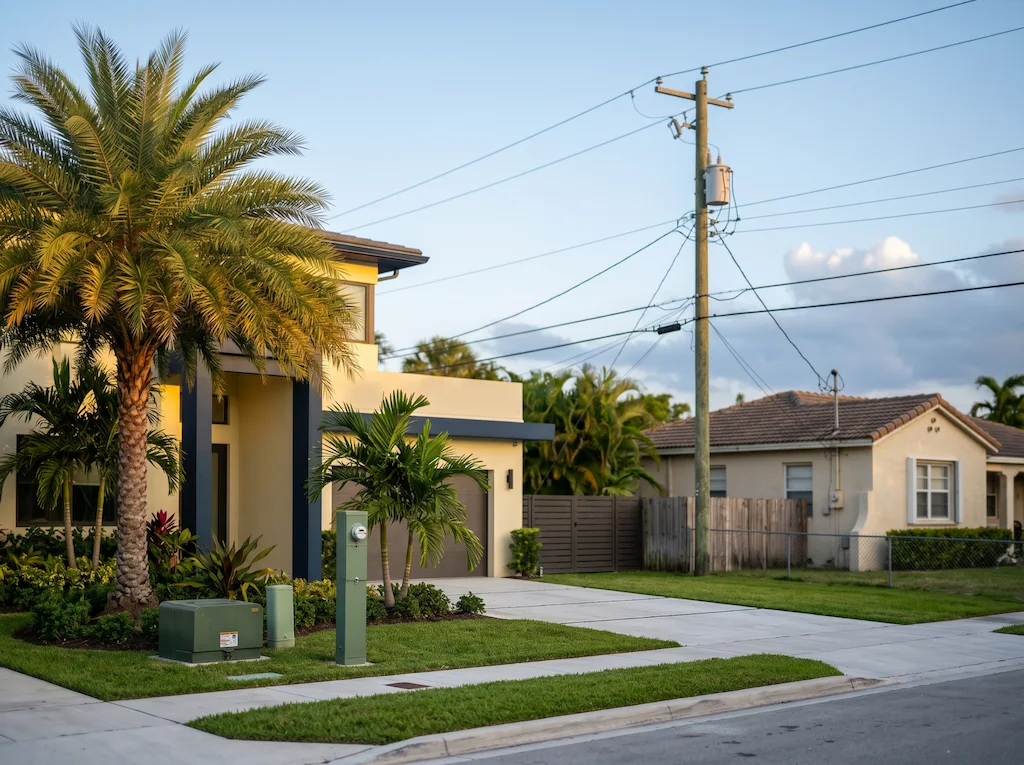
Miami Shores property owners face an important decision when it comes to their electrical infrastructure. The choice between underground and overhead electrical service affects not only the aesthetics of a property but also its reliability, safety, and long-term costs.
Underground electrical service in Miami Shores typically requires specific permits, proper installation methods to protect tree roots, and coordination with FPL, while offering significantly better performance during storms compared to overhead lines. FPL estimates that underground power lines perform 50% better than overhead power lines day-to-day and 85% better during severe weather conditions, making them particularly valuable in hurricane-prone South Florida.
The conversion process involves multiple steps including trenching or directional boring, securing necessary easements, and working with licensed electricians to reconfigure meter enclosures. Understanding Miami Shores' specific requirements, installation methods, and the associated costs helps property owners make informed decisions about their electrical service.
Electrical service reaches properties through two primary methods: overhead lines mounted on poles or underground cables buried in trenches. Miami Shores Village maintains specific standards for both installation types.
Overhead electrical service delivers power through visible wires suspended from utility poles to a mast attached to a building's exterior. The lines connect at a weather head near the roofline. This method is common in older neighborhoods and rural areas.
Underground electrical service runs through insulated cables buried in trenches from the utility transformer directly to the meter or panel. No visible wires appear above ground. Newer subdivisions typically feature this configuration.
The primary differences include cost, aesthetics, and weather vulnerability. Overhead lines cost less to install and repair because they require no excavation. Underground systems offer better storm protection and cleaner appearance but involve higher installation expenses. Overhead repairs happen faster since technicians can easily access visible components. Underground repairs require excavation, potentially disrupting landscaping.
Miami Shores Village enforces specific electrical service requirements through its Building and Zoning Department. Property owners must obtain permits before installing or converting service types.
The Village Building Department is located at 10050 NE 2nd Avenue, Miami Shores, FL 33138. Residents can contact the department at (305) 795-2207 for permit information and service standards. All electrical work requires licensed contractors and inspections.
New construction projects may face underground service mandates depending on subdivision regulations. Conversion from overhead to underground service requires utility coordination and village approval.
Miami Shores follows specific standards for underground electrical service in both new construction and existing properties, with mandatory requirements that property owners must meet during development or major electrical work.
All new residential construction in Miami Shores requires underground electrical service from the outset. Developers and homeowners must work with a licensed electrical contractor to install the proper meter enclosure configured for underground service delivery.
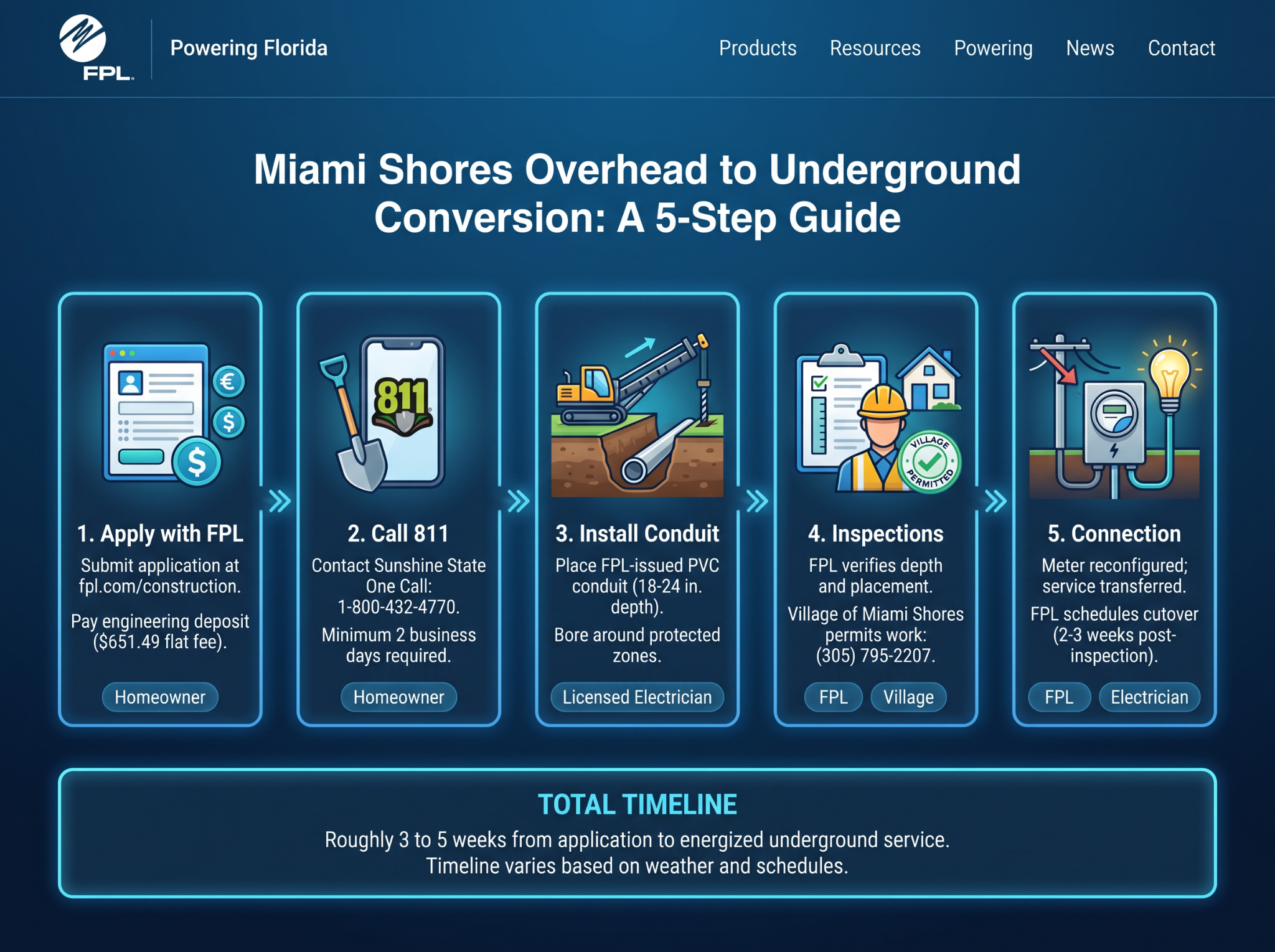
The property owner is responsible for installing FPL-provided PVC conduit, which comes in 20-foot lengths. Before any trenching begins, utility locates must be called in at 1-800-432-4770. FPL inspects the installed conduit to verify compliance with national electrical codes before proceeding.
New subdivisions and communities must provide detailed conversion area information and secure necessary easements for underground facilities. The process includes payment of a non-refundable engineering deposit and adherence to municipal inspection requirements before FPL schedules the final connection.
Existing homes with overhead service may need to convert to underground service during substantial renovations or electrical system upgrades. Property owners requesting voluntary conversion from overhead to underground must hire a licensed electrician and pay applicable tariff fees.
The homeowner secures right-of-way easements if needed and coordinates with other utilities like telecommunications and cable. After installing the FPL-issued conduit and passing both FPL and municipal inspections, appointments are typically scheduled within two to three weeks for the actual conversion work.
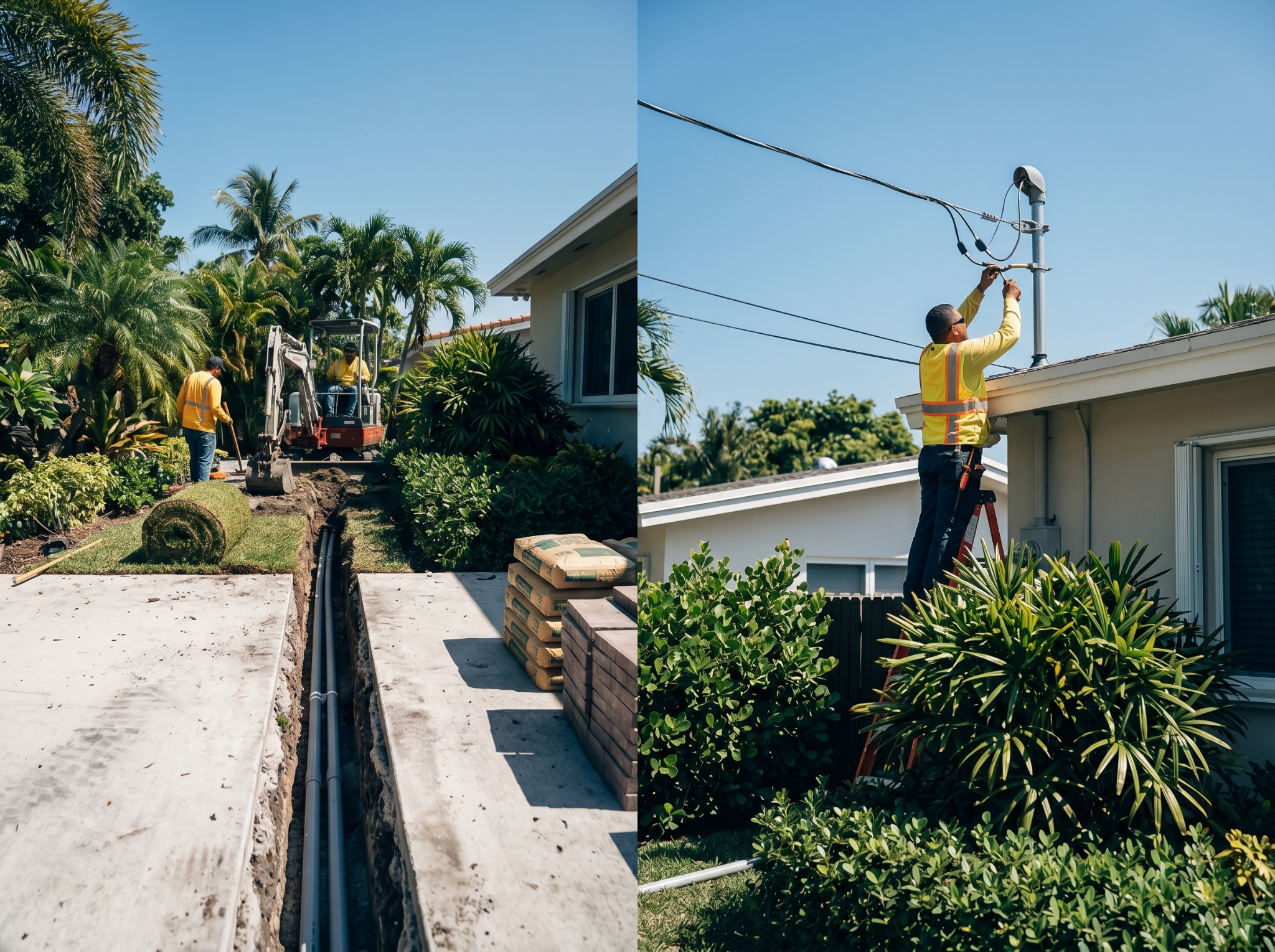
Installation methods for underground electrical service vary based on site conditions and local requirements, with specific standards governing conduit placement and equipment locations. Property owners must understand both excavation techniques and equipment specifications to ensure compliant installations.
Trenching underground cable is the most common installation method, requiring open excavation to place conductors and conduit. This approach works well in areas with few obstacles and easily excavated soil. Crews dig trenches typically 24 to 36 inches deep, lay the conduit or direct-bury rated cable, then backfill.
Boring creates underground pathways without surface disruption, making it ideal near established trees or landscaping. This trenchless method drills horizontally beneath the ground, protecting root systems that trenching would sever. The technique costs more but preserves mature vegetation and minimizes property damage.
Miami Shores properties with protected trees often require boring to maintain tree health. Root zones extend well beyond the canopy drip line, and severing major roots during trenching can destabilize or kill valuable specimens.
Underground service conductors run through protective conduit from the service point to the meter enclosure. PVC Schedule 40 or Schedule 80 conduit provides the required protection for buried cables, with sizing based on conductor gauge and quantity.
Meter pedestals for underground service typically install at property lines or building exteriors. Ground-level meter installations must meet utility accessibility requirements while maintaining adequate clearances from windows, doors, and other building features.
Budget and scheduling differ significantly between underground and overhead installations in Miami Shores. Underground systems require trenching and conduit work that adds both expense and time, while overhead connections are faster but come with visible infrastructure.
Overhead service typically costs less upfront because it avoids excavation work. The installation cost for underground systems ranges from 1 to 2.5 times more than equivalent overhead circuits due to trenching, conduit materials, and soil restoration.
Miami Shores properties with concrete driveways or landscaping face higher underground costs because crews must cut, trench, and restore hardscaping. Underground installations also require coordination with FPL for meter placement and conduit routing.
Key cost factors:
Homeowners pursuing underground conversions should understand that Florida established overhead as the standard construction method because it proves most cost-effective over time.
Both service types require Miami Shores building permits and FPL coordination. Underground installations add inspection steps for trench depth, conduit placement, and backfill before energization.
Overhead projects typically complete faster—often within 2-3 weeks from permit to final inspection. Underground work extends timelines by 1-2 weeks due to excavation, utility locates, and staged inspections. Rain delays affect underground schedules more severely since trenches must remain dry during conduit installation.
YES Electrical Solutions provides comprehensive underground electrical service installation in Miami Shores with expertise in navigating local permit requirements and protecting existing landscapes during construction.
The company uses directional boring and precision trenching techniques to install underground electrical lines while avoiding damage to tree root systems and existing landscaping. These methods minimize surface disruption compared to traditional excavation.
YES Electrical Solutions handles all permit applications and inspections required by Miami Shores for underground conversions. Licensed Florida electricians coordinate with local building departments to ensure installations meet municipal codes and FPL specifications.
The team manages the entire conversion process, including coordination with utility companies for service transfers and scheduling required inspections. They provide binding cost estimates that account for equipment, materials, and labor specific to each property's requirements.
YES Electrical Solutions serves Miami Shores and throughout Miami-Dade County for residential and commercial electrical services. The company provides emergency electrical work alongside scheduled underground service installations.
Licensed electricians are available to assess properties for underground conversion feasibility and provide detailed project timelines. Property owners can request consultations to discuss specific site conditions, permit requirements, and cost estimates for converting overhead service to underground infrastructure.
Miami Shores residents converting from overhead to underground electrical service need to understand local code requirements, FPL procedures, and associated costs before starting their projects.
Miami Shores follows the National Electrical Code standards for underground installations. The village requires proper permitting through the building department before any conversion work begins.
Licensed electricians must handle all meter enclosure reconfigurations. The electrical work often triggers requirements to bring older home wiring up to current code standards, which can add unexpected costs and complexity to conversion projects.
Miami Shores requires coordination with FPL and proper electrical permits before conversion work starts. Property owners must ensure their electrician obtains necessary approvals from the village's building department.
The village enforces easement requirements for underground utility placement. FPL typically needs front easements to ensure crews can quickly access equipment during outages and maintenance.
Homeowners face a flat fee of $651.49 to FPL for standard residential conversions. Additional costs include electrician fees, permit expenses, and trench excavation work.
Underground facilities can cost between $500,000 and $4 million per mile for community-wide conversions. Individual service conversions typically cost less but vary based on trench length, required electrical upgrades, and property-specific factors.
FPL requires certified electricians to reconfigure meter enclosures for underground service. The meter can must accept power from underground conduit entering from below rather than overhead weatherhead connections.
Standard residential services between 100 and 320 amps qualify for conversion. Homeowners can verify their service size by checking their FPL meter for specific designations like AC, ACD, ACP, ACR, 5C, 5CJ, or 7C.
FPL does not publicly provide detailed maps of underground power lines. Property owners must contact Sunshine State One Call at 1-800-432-4770 at least two business days before excavating to have buried lines marked.
This mandatory notification protects people and property during any digging work. Florida law requires anyone excavating to follow this procedure regardless of project size.
Homeowners begin by applying at fpl.com/construction after confirming their service qualifies. They must purchase FPL-specified materials and arrange for conduit installation following FPL's underground conversion process.
After installing the conduit, homeowners schedule an FPL inspection to verify proper depth and compliance. Following inspection approval and electrician coordination, FPL schedules the final conversion work, which typically takes two to three weeks.