
Miami Shores Village has electrical regulations that require vegetation to be kept at least 6 feet from power lines to prevent outages and safety risks, especially during hurricane season. These rules apply to both overhead and underground service lines.
Property owners must obtain permits from the Building Department before making electrical changes or removing trees near service lines, while tree-removal permits are issued by Miami-Dade County’s Regulatory and Economic Resources Department. The village’s goal of expanding its tree canopy while ensuring electrical safety creates challenges that residents must navigate to avoid violations and service interruptions.
Because landscape rules under Miami-Dade Code Chapter 24 intersect with electrical safety standards, careful planning is essential for any project involving trees near power infrastructure. FPL manages vegetation through its tree-line maintenance program, but property owners are still responsible for maintaining proper clearances on their property.
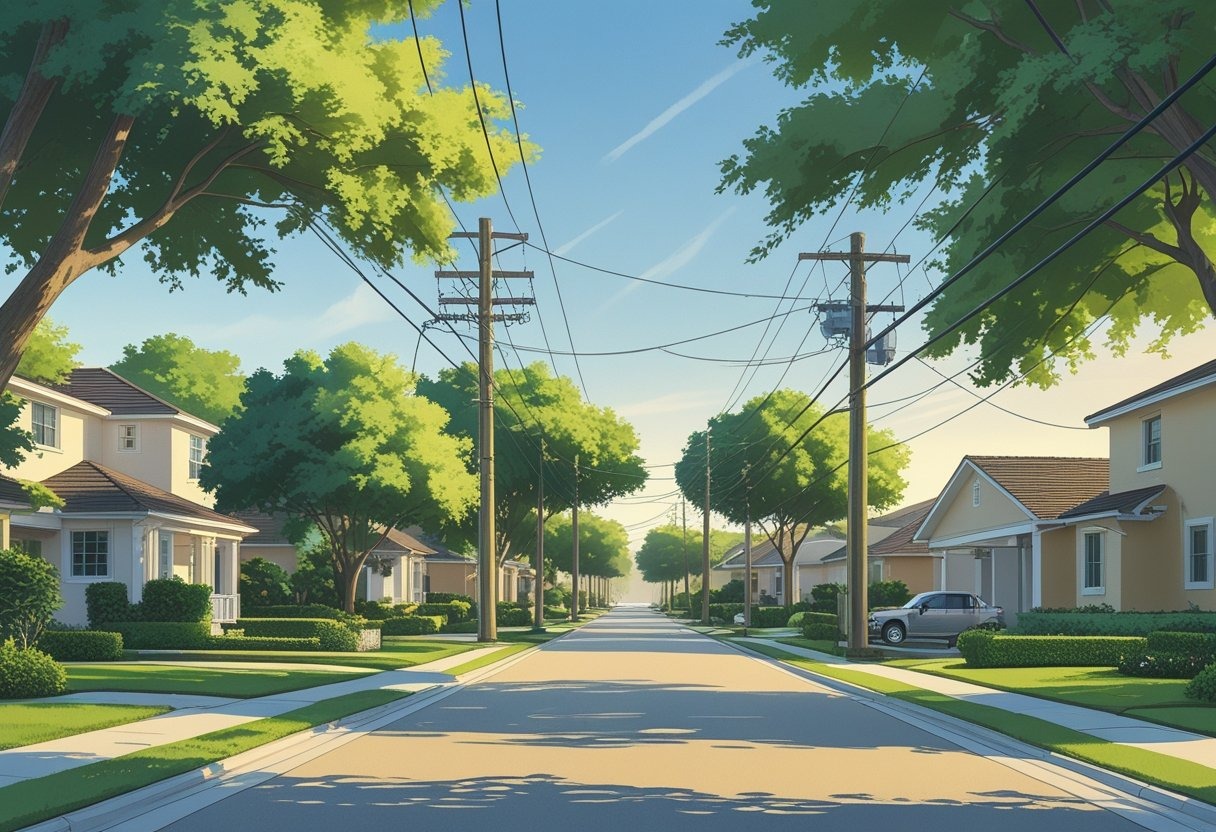
The Miami Shores Village Building Department enforces specific electrical standards that prioritize tree canopy preservation and aesthetic considerations. The village maintains stringent requirements for underground utilities and installation methods that differ from typical Florida municipalities.
The Building Department operates as the primary authority for electrical permit approval and inspection services in Miami Shores Village. Property owners and contractors can access building department online services for permit applications and project tracking.
The department requires all submissions through their CSS Portal using Google Chrome, with documents in flattened PDF format. Electrical permits in Miami Shores Village cover both subpermits and standalone applications for residential and commercial projects.
Miami Shores Village mandates underground electrical service lines to protect its established tree canopy. The village prohibits overhead electrical installations in most residential areas to prevent conflicts between power lines and mature trees.
Electrical contractors must route service lines underground from the street connection to the structure. This requirement applies to new construction, service upgrades, and replacement installations.
The village enforces appearance standards beyond standard Florida Building Code requirements. Electrical equipment placement must minimize visual impact on street-facing elevations.
Building permits and inspections include review of equipment locations, conduit routing, and meter placement. The department evaluates compliance with both safety codes and village aesthetic ordinances before issuing certificates of completion.
Miami Shores Village prioritizes underground electrical service for new construction projects to protect the community's tree canopy and enhance system reliability during severe weather events. Trenching methods must minimize root damage and comply with specific depth requirements.
All new residential and commercial construction in Miami Shores Village requires underground electrical service installation. This mandate aligns with broader efforts to reduce vulnerability to storm damage and preserve the village's established tree canopy.
Underground power lines perform 50% better than overhead lines during normal conditions and 85% better during hurricanes and tropical storms. The installation involves routing power through buried conduit to either a ground-level meter pedestal or wall-mounted meter.
Developers must coordinate with Florida Power & Light during the planning phase to ensure proper service placement. The electrical service connection enters the property below grade, eliminating the need for utility poles and overhead wires that can conflict with tree branches.
Trenching for underground electrical lines must maintain minimum distances from existing trees to protect root systems. Contractors should trench at least 10 feet from tree trunks when possible and avoid cutting roots larger than 2 inches in diameter.
Installation of underground service requires conduit burial at depths between 18 and 24 inches for residential applications. Directional boring offers an alternative to open trenching in areas with established trees, creating minimal soil disturbance.
Hand digging near critical root zones reduces damage compared to mechanical excavation. Tree protection zones must remain undisturbed during construction activities.
The Miami Shores Village Building Department requires permits for electrical work through an online application system, with specific documentation needs and inspection requirements that account for the village's tree-lined streets.
Applicants must create an online account through the Citizen Self Service Portal to submit electrical permit applications. The system requires digital submission of all documents and forms.
The Building Department processes most permits within 5-10 business days. Applications involving trees near service lines receive additional scrutiny during the review phase. Staff evaluates whether proposed work might impact protected tree canopies or root systems.
Property owners can also submit applications in person at 10050 N.E. 2nd Avenue during weekday office hours from 8:30 AM to 4:00 PM.
Electrical permit applications require specific forms and documentation before approval. Contractors must provide valid state or county licenses, proof of insurance, and detailed project plans.
Inspection requests must be submitted online by 3:30 PM for next-day scheduling. Permit cards and plans must be on-site during every inspection. Re-inspections for the same work incur an $85 fee.
Work hours are restricted to Monday through Friday 8:00 AM to 7:00 PM and Saturday 8:00 AM to 6:00 PM.
Electrical service upgrades require permits in Miami Shores Village. These projects often involve installing new panels, upgrading amperage capacity, or replacing outdated systems. Work near mature trees demands careful planning to avoid root damage during trenching.
New construction projects require master permits with electrical subpermits. All permits remain valid for 180 days, with approved inspections extending validity for another 180 days.
Electrical projects in Miami Shores Village involve permit fees, inspection costs, and potential tree preservation expenses that vary based on project scope and existing site conditions.
Electrical permits require specific documentation and forms that must be submitted before work begins. Project delays often occur when tree canopy assessments reveal conflicts between proposed service lines and protected vegetation.
Property owners should budget for arborist consultations when electrical installations affect existing trees. Rerouting service lines to avoid canopy interference adds $500 to $2,000 in additional planning and installation costs. Underground service trenching near root systems requires specialized equipment and techniques to prevent tree damage.
Common expense categories include:
Projects affecting protected tree designations need approval from multiple departments, extending timelines by two to four weeks.
The Miami Shores Village Code Compliance Department enforces electrical and tree preservation standards through formal violation notices. Unpermitted electrical work results in fines starting at $250 per day until corrected.
Removing a tree without proper authorization can result in fines of $500 to $5,000 per tree. When reporting violations, property owners must provide their name and address, since anonymous complaints are not allowed under Florida Senate Bill 60.
Compliant installations help maintain property value, prevent expensive retrofits, and support canopy preservation, which can reduce energy use by 15–30% annually. Projects that meet all requirements also receive faster approval and avoid legal liability for code violations.
YES Electrical Solutions brings specialized expertise in underground electrical installations that align with Miami Shores Village's strict tree preservation requirements. Their approach prioritizes both electrical safety and canopy protection through proven installation techniques.
YES Electrical Solutions offers comprehensive electrical services that address Miami Shores Village's unique underground infrastructure needs. The company's licensed electrician, Yasser, implements installation methods designed to minimize root system disturbance during underground service line projects.
Their team coordinates directly with village arborists to map root zones before excavation begins. This planning phase identifies optimal trenching paths that avoid critical root structures while maintaining required service line depths. The company uses directional boring equipment for installations beneath established tree canopies, eliminating the need for wide trenches that damage root networks.
YES Electrical Solutions maintains current knowledge of Miami Shores electrical codes and tree protection ordinances. They provide commercial electrical services and residential installations using techniques that preserve the village's distinctive tree-lined streets. The company documents all underground installations with detailed site maps showing proximity to protected trees, ensuring future utility work avoids compromising tree health.
Miami Shores Village residents must follow specific regulations regarding tree maintenance near power lines and comply with electrical service standards established by both local ordinances and Florida Power & Light requirements.
Miami Shores Village mandates keeping vegetation at least 6 feet from power lines to prevent outages during hurricanes and other severe weather events. This clearance requirement applies to all tree canopy growth near electrical service lines.
The Village prunes trees on public property at minimum intervals of once every two years or when vegetation interferes with visibility of traffic control devices. Property owners remain responsible for maintaining trees and vegetation in swale areas adjacent to their property to ensure compliance with clearance standards.
Miami Shores Village updates electrical standards as needed to align with Florida Building Code requirements and FPL specifications. The Village received a 2022 GREEN Miami-Dade County Matching Grant for its Tree Canopy Project in the amount of $15,540.
Updates typically occur when state or county regulations change or when utility providers modify their service standards. Residents should contact the Building Department at 305-795-2210 for current requirements.
FPL establishes specific underground service requirements through their Electric Service Standards documentation. These standards govern installation depths, conduit specifications, and meter placement for underground electrical systems.
Property owners planning construction or landscaping projects must coordinate with FPL to locate underground utilities before digging. The utility company maintains responsibility for primary service lines while property owners handle secondary service connections from the meter to their buildings.
The 6-foot minimum clearance from power lines serves as the primary safety distance requirement for tree planting and trimming activities. FPL positions power lines as the highest connections above all other utility lines for safety reasons.
Residents planning to plant new trees should select species that will maintain appropriate mature heights and canopy spreads. Proper tree selection helps prevent future conflicts with power lines and reduces maintenance needs.
Electric meter installations must comply with FPL Electric Service Standards and Miami Shores Village Building Department requirements. These specifications cover meter placement height, accessibility, clearance from other structures, and protection from weather elements.
Residents planning new construction or service upgrades must obtain permits through the Village's Building Department before installation. The Building Department reviews plans to ensure compliance with all applicable codes and standards.
Property owners must maintain trees and vegetation on their private property to prevent interference with electrical service lines. Permits for tree removal or relocation can be obtained through Miami-Dade County Regulatory and Economic Resources Department.
Residents should report damaged trees in public rights-of-way by calling the Public Works Department at 305-795-2210. Property owners maintain responsibility for swale areas adjacent to their property, including vegetation management to meet the 6-foot power line clearance requirement.