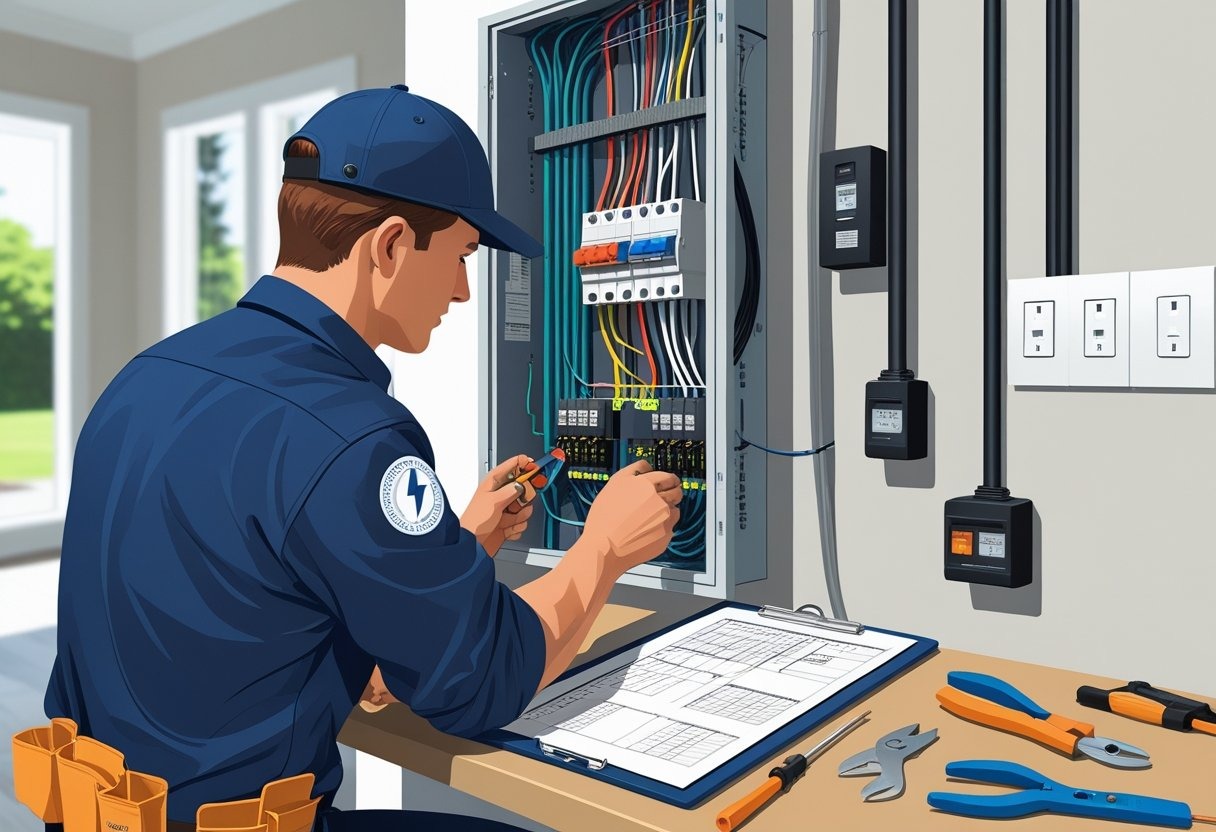
Electrical work in Doral requires strict adherence to local codes and regulations that govern commercial and residential projects. The city maintains comprehensive standards to ensure safety and compliance for all electrical installations and modifications.
All contractors working on electrical projects in Doral must be properly registered with the city and maintain current licensing, insurance, and permit documentation. The City of Doral Building Department oversees these requirements through efficient permitting and inspection processes designed to protect building occupants.
Understanding the permit process and code requirements helps property owners and contractors navigate electrical projects successfully. Contractors or owners working in Doral are required to be registered with the City, which includes maintaining proper insurance coverage and business licensing throughout the duration of any open permits.
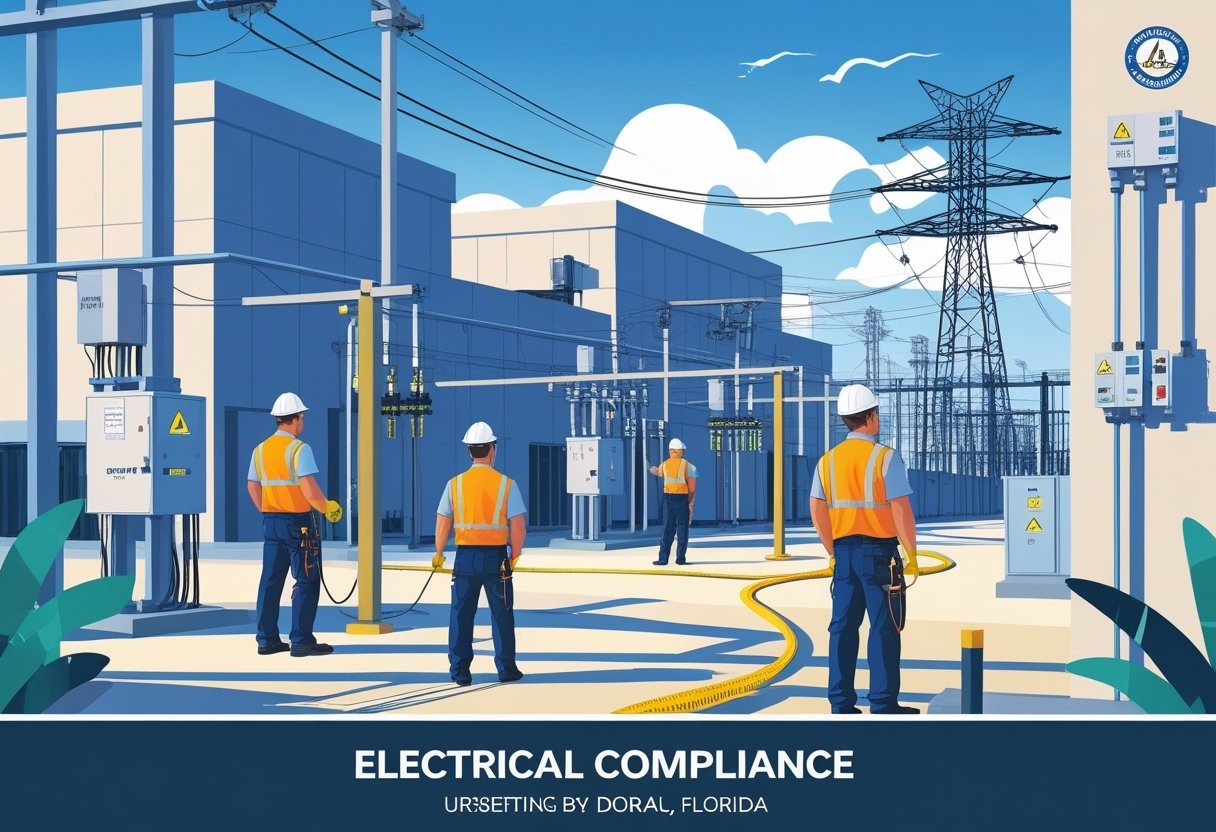
Doral's rapid commercial expansion creates strict electrical compliance requirements that affect project timelines and costs. Licensed contractors must navigate complex building codes while meeting safety standards for the city's diverse industrial facilities.
Doral has transformed into a major commercial hub with extensive warehouse districts and corporate offices. The city's industrial zones require robust electrical systems that handle high-capacity loads while maintaining safety standards.
Key compliance factors include:
Commercial electrical contractors in Doral must understand these specialized requirements. Violations can result in costly project delays and safety hazards.
The city's proximity to Miami International Airport adds aviation-related electromagnetic compliance requirements. Industrial facilities often need specialized electrical designs to prevent interference with airport operations.
Doral's position as a logistics center drives demand for specialized electrical infrastructure. Warehouses and offices along Doral Boulevard and NW 87th Avenue require comprehensive electrical planning.
Major project considerations include:
The city's free trade zone status attracts international businesses with unique electrical needs. These facilities often require 480V three-phase power systems and specialized equipment connections.
The City of Doral requires permits for most electrical projects, with all work performed by licensed contractors. The Florida Building Code governs electrical installations alongside local ordinances.
Licensing requirements:
Licensed electrical contractors must stay current with National Electrical Code updates and local amendments. The permitting process includes plan review, inspection scheduling, and final approval stages.
Commercial projects require additional documentation including load calculations, equipment specifications, and emergency system layouts.
The 2023 Florida Building Code establishes comprehensive electrical standards through Chapter 27 and NFPA 70 requirements. Commercial and industrial projects must meet specific compliance standards for essential electrical systems, standby power, and emergency equipment installations.
Chapter 27 of the Florida Building Code governs all electrical design, construction, and installation requirements for buildings covered under the code. The provisions work in conjunction with NFPA 70 to establish comprehensive electrical safety standards.
Installation and Design Requirements:
The Florida Fire Prevention Code and NFPA 70 govern the ongoing use and maintenance of electrical systems. This dual oversight ensures both initial compliance and long-term safety performance.
Commercial and industrial electrical projects face specific compliance requirements under the 8th Edition. Group I-2 occupancies in flood hazard areas must install essential electrical systems and generators according to ASCE 24 standards.
Standby Power Requirements:
Standby power systems for emergency responder communications must operate at 100 percent capacity throughout the required duration. Generator connections for temporary hookups must meet specific elevation requirements in flood-prone areas.
The 8th Edition introduced significant electrical code changes that affect current electrical work in Florida. These updates align with the 2020 National Electrical Code and address modern electrical system needs.
Key Changes Include:
Contractors must stay current with these changes to ensure permit approval and code compliance. The updates particularly impact commercial projects with emergency systems and buildings in flood-designated areas.
Generator installation requirements under the new code specify documentation needed for building permit applications involving permanently installed standby generators.
The City of Doral mandates permits for most electrical projects and requires all work to be performed by licensed contractors. Property owners must understand when permits are necessary, contractor qualifications, and potential penalties for non-compliance.
The City of Doral requires permits for most electrical projects to ensure safety and code compliance. Major electrical work including panel upgrades, new circuits, rewiring, and service upgrades always requires permits.
Permit-Required Projects:
Minor repairs like replacing outlets, switches, or light fixtures typically do not require permits. However, any work involving new wiring or circuit modifications must be permitted and inspected.
Property owners should consult with the Building Department before starting any electrical work to determine permit requirements. Projects without proper permits can face stop-work orders and require costly corrections.
All permitted electrical work must be performed by licensed electrical contractors registered with the state of Florida. Contractors must maintain proper licensing, insurance, and bonding to work legally in Doral.
Required Contractor Qualifications:
Licensed contractors handle permit applications, ensure code compliance, and coordinate required inspections. Property owners should verify contractor credentials before hiring and ensure all permits are properly obtained.
Electrical work performed without permits or by unlicensed contractors results in significant penalties and safety risks. The City Building Department enforces compliance through inspections and violation notices.
Typical Violations Include:
Violations can result in fines, stop-work orders, and requirements to tear out completed work for inspection. Insurance companies may deny claims for unpermitted electrical work, leaving property owners financially liable for damages.
The electrical permit process in Doral requires registration through the city's online portal, submission of the updated 2025 application form, plan review completion, fee payment, and passing mandatory inspections. Licensed electrical contractors must handle all electrical work throughout this process.
Property owners and contractors must create an account in the Citizen Self Service portal to start the permit process. The portal allows application submission, permit tracking, and project document management.
New users must provide contact details, property information, and identity verification. Contractors must complete extra registration steps before submitting permits.
When paying invoices, do not log into your account. Use the PAY INVOICES tab and enter the invoice number with the INV prefix.
All electrical permit applications submitted after January 1, 2025 must use the updated form available in the city’s Forms Section. The new form improves compliance and simplifies the submission process.
Applications must include a detailed work description, contractor information, and property specifications. A licensed electrical contractor is required for all installations, repairs, and upgrades.
Batch applications can be submitted following the Digital Files and Batch Submittals Guide. Files must be flattened, unlayered, and unlocked to receive city stamps.
The Building Department reviews all electrical plans to ensure compliance with local and state codes. Plans examiners are available for counter meetings Monday through Friday from 7:00 a.m. to 9:00 a.m. or by appointment.
Design Professional Day meetings can be scheduled for complex projects from Monday to Thursday between 7:00 a.m. and 5:00 p.m. Friday appointments are available on request.
Review times vary depending on project complexity and application volume. The department provides feedback if corrections are required.
Electrical permit fees depend on the type of work, property classification, and project value. The city uses standard fee schedules for residential and commercial installations.
Payments are made through the online invoice system. Do not log in when making payments. Enter the invoice number directly instead.
Additional fees may apply for plan review, inspection services, and Miami-Dade County impact fees. A full breakdown is provided during the application review.
Inspection requests must be submitted online by 3:00 p.m. for next business day scheduling. The city may require rough-in, final, or specialty inspections depending on the project.
Inspectors are available for counter meetings Monday through Friday from 7:00 a.m. to 8:00 a.m.
Failed inspections require corrections and rescheduling. Overtime and callback inspections can be requested by email between 7:00 a.m. and 2:00 p.m.
Doral property owners need specific municipal resources and qualified professionals to ensure electrical work meets local building codes and industry standards. Licensed contractors provide essential expertise for complex installations, green building requirements, and high-voltage systems.
The City of Doral Building Department oversees electrical permits and inspections for all construction projects within city limits. Property owners must obtain proper permits before beginning electrical work to ensure compliance with local codes and safety standards.
The department is located at 8401 NW 53rd Terrace, Doral, FL 33166. Contractors and property owners can visit during regular business hours for permit applications and code consultations. The building department phone number is (305) 593-6680 for inquiries about electrical permits, inspection scheduling, and code requirements.
Key services include:
High-voltage installations require specialized expertise and additional safety protocols beyond standard residential wiring. These systems typically involve 480V or higher electrical service for industrial equipment, large HVAC systems, and commercial machinery.
Smart building technologies integrate electrical, data, and automation systems into unified networks. Licensed contractors must understand building automation protocols, energy management systems, and integrated security platforms. These installations require coordination between multiple trades and careful planning of electrical infrastructure.
Critical components include:
LEED certification requires specific electrical system efficiency standards and documentation throughout the construction process. Energy-efficient lighting systems, automated controls, and renewable energy integration contribute to LEED point accumulation.
Licensed electrical contractors must document energy usage calculations, specify LEED-compliant fixtures, and coordinate with commissioning agents. Smart lighting controls, occupancy sensors, and daylight harvesting systems are common LEED requirements that require professional installation and programming.
Licensed electrical contractors provide legal protection through proper insurance coverage and warranty guarantees on completed work. They understand current electrical codes, safety requirements, and permit processes that ensure installations meet municipal standards.
Hiring a licensed electrician protects property investments and provides peace of mind through professional accountability. Licensed professionals carry liability insurance, complete continuing education requirements, and follow established safety protocols that reduce project risks and ensure long-term system reliability.
Property owners and contractors in Doral must navigate specific code requirements, licensing procedures, and permit exemptions when planning electrical work. Florida's electrical licensing system includes multiple categories with distinct authorization levels and renewal requirements.
Doral follows the Florida Building Code and National Electrical Code (NEC) standards for all electrical installations. During the permit submission process, contractors must meet minimum code prescribed construction requirements that are verified through inspection.
All electrical work must comply with NEC standards for wiring, fixtures, appliances, apparatus, raceways, and conduit installations. The code requirements cover both residential and commercial properties within Doral city limits.
Licensed inspectors verify compliance during scheduled inspections. This ensures electrical systems meet safety standards before receiving final approval.
Florida requires electrical contractors to fulfill competency requirements and register with the state department. The Electrical Contractors' Licensing Board oversees licensing and regulation of electrical contractors throughout the state.
Applicants must demonstrate experience and knowledge in electrical installation, repair, alteration, and design work. The licensing board reviews applications and conducts hearings related to licensure matters.
Contractors must maintain proper insurance coverage and meet continuing education requirements. License renewal occurs every two years with an August 31 deadline.
Florida offers several electrical license categories with specific work authorizations. Electrical contractors (EC) can install, repair, alter, and design electrical systems including all alarm systems and specialty categories.
Registered electrical contractors (ER) work only in specific jurisdictions but cannot contract for alarm systems. Alarm system contractors have separate categories for different system types.
Specialty contractors (ES) focus on specific segments like elevator systems, utility lines, low voltage systems, or residential electrical work. Each license type has defined scope limitations and geographic restrictions.
License applications require proof of experience, education, and competency in electrical contracting. Applicants must submit insurance documentation and complete required examinations.
The state verifies contractor licensing and insurance during the permit process. Financial responsibility documentation and bonding requirements vary by license type.
Background checks and professional references support the application process. Additional documentation may include business registration and tax identification numbers.
Most electrical work in Doral requires permits and licensed contractors. Only minor repairs may qualify for limited exemptions.
Property owners should confirm exemptions with the Doral Building Department, since unpermitted work can create safety and legal issues.
Emergency repairs may receive temporary allowances, but permits must still be obtained quickly, and code enforcement can require corrections to unpermitted work.
Florida maintains online license verification systems for checking contractor credentials. The state database shows license status, expiration dates, and disciplinary actions.
Property owners should verify both state licensing and local registration requirements. Doral requires contractor registration with proper insurance documentation.
Licensed contractors must display license numbers on vehicles and business materials. Verification protects property owners from unlicensed work and potential liability issues.